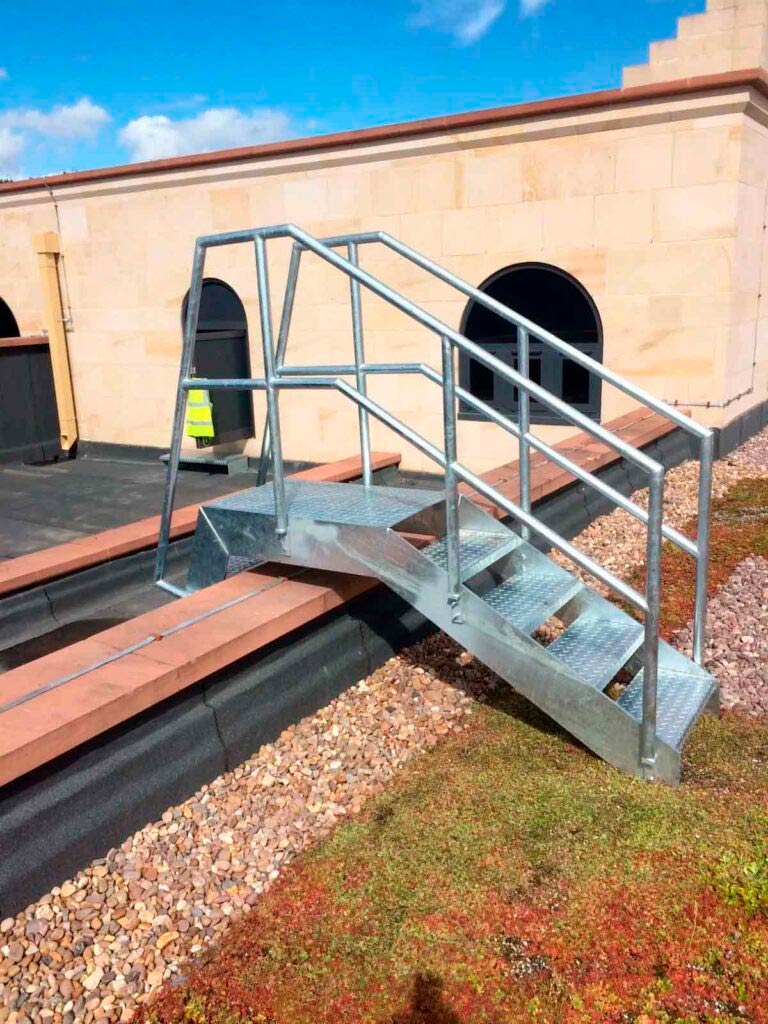

It is now illegal to fabricate Structural steel without a CE
marking certification
Now this may seem complicated to some but it is important to know that you are putting yourself and others at risk
without checking for CE certification from your steel fabricator. For full understanding please read below.
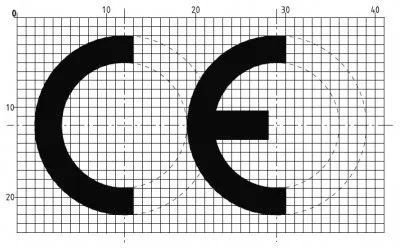
The process of CE Marking sounds quite simple, if you can prove you produce a quality product by following tried and
tested processes and procedures that control, inspect, verify and trace, then you can CE Mark your product. However,
when we introduce a variety of European and International Standards, that we are governed by, which interlink with each
other and also pay reference to over 100 other standards that we must take into consideration, it gets very complicated.
I propose to explain the CE Marking route in 3 easy steps:
1. The main requirements of CE Marking
2. The routes to CE Marking
3. Explanation of the technical requirements.
1. Requirements
There are 3 basic requirements that need to be addressed ready for assessment by the Notified Body. Depending on how
good the Quality System is, depicts the amount of work companies will have to do.
• Factory Production Control (FPC) – We must have a FPC that is certified for effectiveness by a Notified Body.
Basically, our ISO 9001 system will satisfy this part.
• A Welding Quality Management System (WQMS) is required that is in accordance with ISO 3834 and depending which part of
this standard, 2, 3 or 4 you work to, determines which Execution Class you can work in. Execution Class’s be explained
later in section 3. We already hold UKAS Certified accreditation to ISO 3834-2 by TWI.
• Documentation requirements will change slightly as we have to provide a CE Mark Certificate for every item. This will
be supplied with the O&M Manual for the client to reference against.
Some companies will look at the above remarks and wish it was that easy. Well, it is if your Quality System is as
affective as ours.
2. Routes
There are two routes to CE Marking Certification The SCCS are now a UKAS Notified Body that allows them to carry out FPC
audits during the six monthly quality audits.
Which ever route is picked a Notified Body will be required to certify their FPC.
The 2 routes come into play when the WQMS is implemented and the decision is made which part of ISO 3834 to go for.
Route 1 – Verify your WQMS using the SCCS, they will be able to certify (not UKAS accredited) the WQMS is in accordance
with ISO 3834 part 3 or 4. This will only allow the company to work on projects where the execution class is 1 or 2.
Route 2 – Obtain UKAS certified accreditation from the TWI. You can be certified to part 2, 3 or 4 of ISO 3834, part 2
covers 3 and 4. Gaining UKAS accreditation to part 2 enables the company to work across all execution classes.
3. Standards
BS EN 1090-1:2009 – Execution of steel structures and aluminium structures – Part 1 Requirements for conformity
assessment of structural components.
Basically, this standard is what all Notified Body’s (SCCS) will follow to assess and certify company’s to allow them to
CE Mark their product. Just like using ISO 9001 to assess our quality system and ISO 14001 to assess our environmental
system.
BS EN 1090-2:2008 – Execution of steel structures and aluminium structures – Part 2 Technical requirements for the
execution of steel structures.
This standard was published in December 2008 and will eventually, following a two year transition period, supersede such
standards as BS 5950-2 (Buildings), BS 5400-6 (Bridges) and part of BS 8100 (Towers and Masts).
We will eventually follow this standard regarding our fabrication and erection tolerances as well as our inspection and
testing regime. The CE Marking 5th Edition of the NSSS is due to be published to reflect this standard. However, it will
be based on Execution Class 2 so for connects or components that fall into Execution Class 3 this standard will be the
specification not the NSSS.
This standard also introduces a number of new concepts:
Execution Class
There are 4 execution classes which range from execution class 1 which is the least onerous through to execution class 4
which is the most onerous.
It is down to the designer / specifier to select the Execution Class required for the structure, an individual component
or a particular detail of a component.
To determine the Execution Class the designer / specifier needs to refer to the following tables from EN 1090-2
• Table B.1 – Suggested criteria for service categories (SC)
• Table B.2 – Suggested criteria for production categories (PC)
• Table B.3 – Recommended matrix for determination of execution classes
To determine your ‘Consequence Class’ as stated in Table B.3, you will need to refer to Table B1 – Definition of
consequence classes (CC), from EN 1990:2002 – Eurocode – Basis of structural design.
The tables will define the criteria for the selection of service category, production category and consequence class.
The results can then be referenced against Table B.3 to identify the execution class.
Table B.1 – Suggested criteria for service categories
| Categories | Criteria |
|---|---|
| SC1 |
|
| SC2 |
|
* DCL, DCM, DCH: ductility classes according to EN 1998-1
** For classification of fatigue actions from cranes, see EN 1991-3 and EN 13001-1
Table B.2 – Suggested criteria for production categories
| Categories | Criteria |
|---|---|
| PC1 |
|
| PC2 |
|
Table B.3 – Recommended matrix for determination of execution classes
| Consequence Classes | CC1 CC2 CC3 |
| Service Categories | SC1 SC2 SC1 SC2 SC1 SC2 |
| Production Categories | PC1 EXC1 EXC2EXC2EXC3 EXC3 a EXC3 a |
| PC2 | EXC2 EXC2 EXC2 EXC3 EXC3 aEXC4 |
a ECX4 should be applied to special structures with extreme consequences of a structural failure as required by national
provisions.
Table B1 from EN 1990:2002 – Eurocode – Basis of structural design
Table B1 – Definition of consequence classes
| Consequence Classes | Description | Examples of buildings and civil engineering works |
|---|---|---|
| CC3 | High consequence for loss of human life, or economic, social or environmental very great | Grandstands, public buildings where consequences of failure are high (e.g. a concert hall) |
| CC2 | Medium consequences for loss of human life, economic, social or environmental consequences considerable | Residential and office buildings, public buildings where consequences of failure are medium (e.g. an office building) |
| CC1 | Low consequences for loss of human life, and economic, social or environmental consequences small or negligible |
Agricultural buildings where people do not normally enter (e.g. storage buildings), greenhouses |
Annex A.3 of BS EN 1090-2:2008 details the practical requirements that are necessary to achieve each execution class.
Tolerances
BS EN 1090-2:2008 now specifies 3 permitted types of geometrical tolerances. It defines the following 3 types as:
1.Essential tolerances – basic limits for a geometrical tolerance necessary to satisfy the design assumptions for
structures in terms of mechanical resistance and stability.2. Functional tolerances – geometrical tolerance which might
be required to meet a function other than mechanical resistance and stability, e.g. appearance or fit up.
3. Special tolerance – geometrical tolerance which is not covered by the tabulated types or values of tolerances given
in this European Standard, and which needs to be specified in a particular case.
Two classes of functional tolerances are given. Class 1 which is the less onerous tolerance is the default for routine
fabrication. Class 2 will require special and more expensive measures in fabrication and erection.
This European Standard will eventually become our bible. Quality cannot be inspected into a product, it has to be built
in.
For products to be free from serious problems in production and in service, it is necessary to provide controls from the
design phase, through material selection, into manufacture and inspection and finally to erection.
BS EN ISO 3834:2005 – Consists of the following parts, under the general title Quality requirements for fusion welding
of metallic materials
– Part 1: Criteria for the selection of the appropriate level of quality requirements.
– Part 2: Comprehensive quality requirements
– Part 3: Standard quality requirements
– Part 4: Elementary quality requirements
– Part 5: Documents with which it is necessary to conform to claim conformity to the quality requirements of ISO 3834-2,
ISO 3834-3 or ISO 3834-4.
As described in section 2, depending on which part of the quality requirements, comprehensive, standard or elementary,
the company decides to work in accordance with, will govern which Execution Class, as stipulated in EN 1090-2:2008, the
company is able to legally produce and CE Mark.
Part 2: Comprehensive quality requirements will allow work to be undertaken in Execution Class 1 to 4.
Part 3: Standard quality requirements will allow work to be undertaken in Execution Class 1 and 2.
Part 4: Elementary quality requirements will allow work to be undertaken in Execution Class 1.
If a company only wants to achieve the Standard or Elementary quality requirements they can follow Route 1 as described
in section 2.
However, if a company wants to achieve the Comprehensive quality requirements they must follow Route 2 as
described in section 2.
To clarify, or complicate matters depending on your perspective, there is one more standard that needs to be followed to
achieve any ISO 3834 standard and that is EN ISO 14731:2006 – Welding coordination – Tasks and responsibilities.
Welding is a special process, which requires the coordination of welding operations in order to establish confidence in
welding fabrication and reliable performance in service. The tasks and responsibilities of personnel involved in welding
related activities (e.g. planning, execution, supervising and inspection) are clearly defined in this standard.
Conclusion
This document describes the basic requirements to achieve CE Marking. There is a lot more complicated detail below the
surface that will affect all departments in different ways. By reading this explanation in conjunction with the relevant
standards you will have a lot more understanding and appreciation of the CE Marking process.
Another good document that explains CE Marking is the BCSA’s ‘Guide to the CE Marking of Structural Steelwork’.